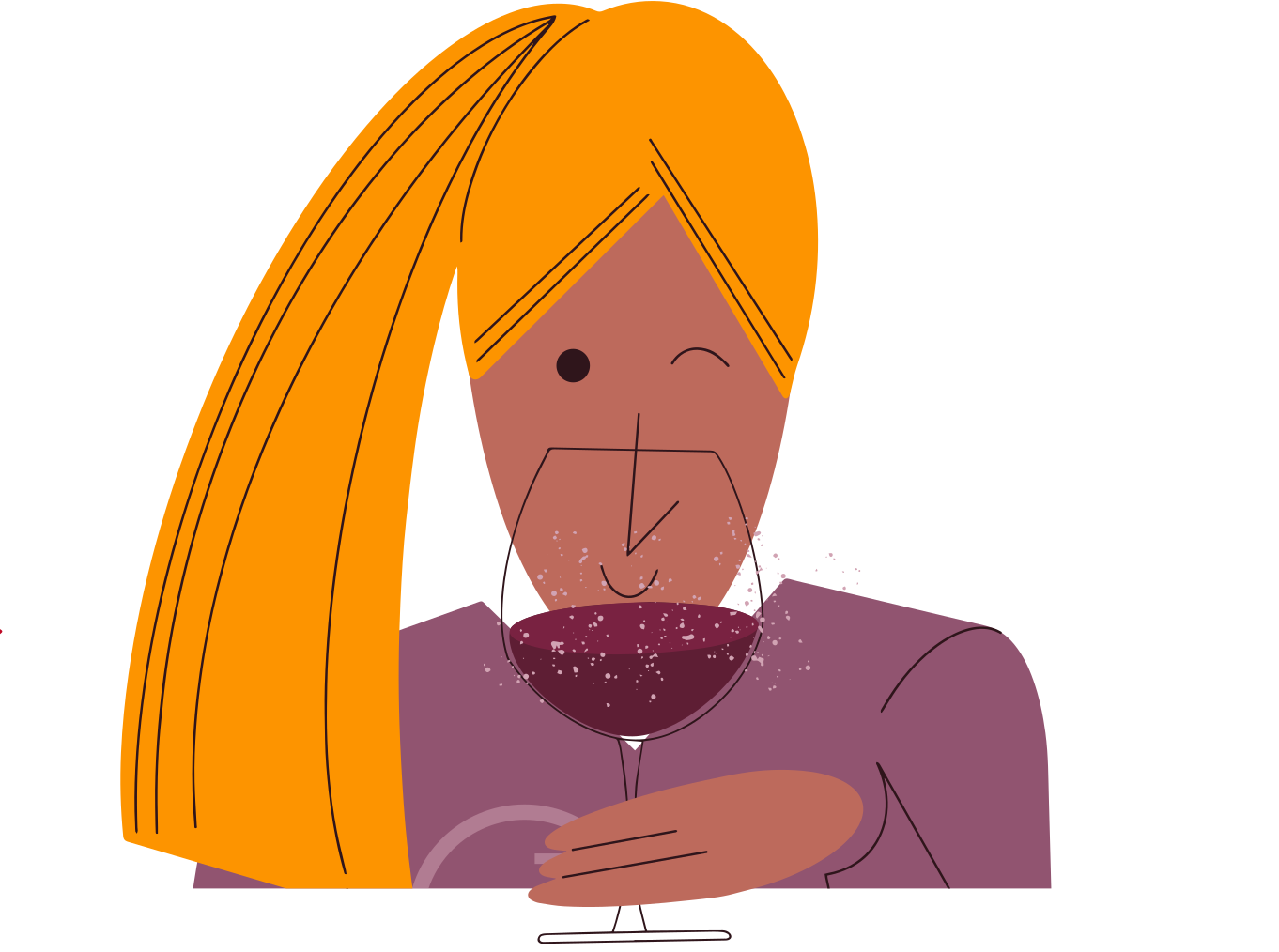

Learning wine basics with the East Texas Wine Project...one sip, swirl, and accidental faux pas at a time.
by Kristin Koonce Burroughs
As you know, this year’s magazine features East Texas wineries. Part of my job as “the Uniquely Longview girl” is to give you a behind-the-scenes look at the people, places, and events that make Longview unique. With that in mind, I attended a meeting of the East Texas Wine Project.
The East Texas Wine Project is an organization that offers three levels of wine education classes and their mission is to “educate wine enthusiasts so as to appreciate wine on a greater level.”
Have you been wondering what was different about me? *flips hair* Well, I have officially attended the Level 1 Beginners Class! *curtsies* I’ll sign autographs later.
The evening began with me devouring every single “palate cleanser” (oyster crackers) within the first few wine tastings. Of course,
I didn’t know they were palate cleansers until after the fact. I thought they were just snacks!
Then came the glass pitcher filled with water. After polishing off an entire platter of oyster crackers, I was obviously parched. So, I poured a glass of water … and then another. Nobody told me the water was meant for rinsing out the wine glasses between tastings!
So there I sat with no palate cleansers, a water pitcher that was only one-third full, and with 13 wine tastings still to go.
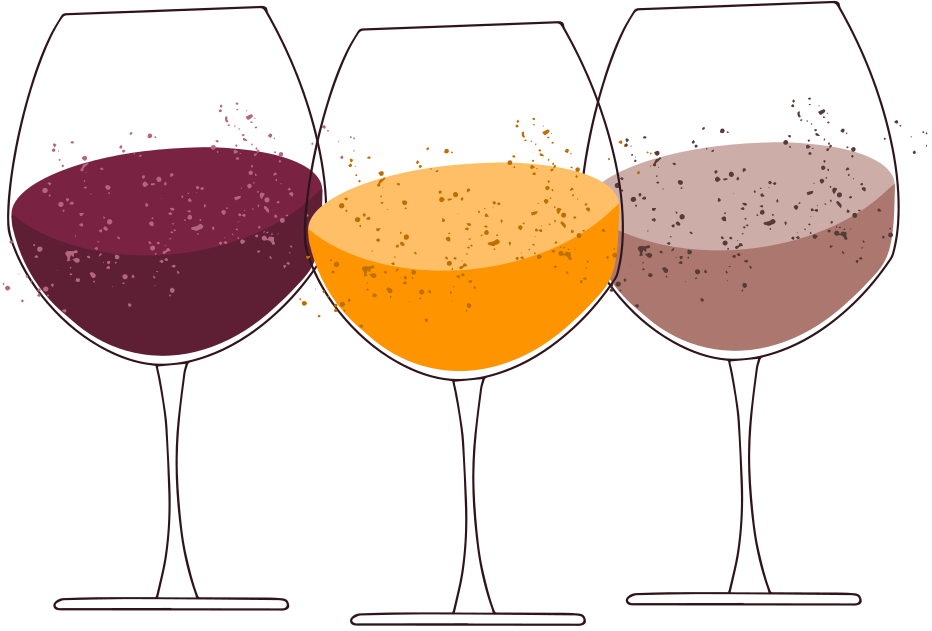
You may be wondering why a self-inflicted water shortage matters at a wine tasting. Well, let me put it this way… About seven tastings in, the girl next to me (we’ll call her Megan) leaned over and asked why my white wine was pink!
That’s when I realized wine tasting is serious science! And, well, I’m not exactly a scientist. I got my first B in fourth-grade science and failed the science TAKS test once (then passed it the next year!), but here I am
today, learning about the science of wine and talking about tannins.
Now, allow me to further explain the class and impress you with my newfound wine knowledge.
Each participant brought a bottle of wine, which was placed inside a numbered jute wine bag. You can imagine my surprise when I learned UPON ARRIVAL that “blind wine tasting” did NOT mean we would be tasting wine while blindfolded. I wish I was kidding.
In addition to oyster crackers, water, and wine, they provided us with a map of France (where wine culture was perfected) along with a sheet listing 12 red wines and eight white wines. This later served as a cheat sheet (and I love a good cheat sheet!)
for a deductive wine tasting test.
Between listing wines, blindly tasting wine, and taking my test, we talked about sulfites, pigments, acidity, the five properties of wine, New World vs. Old World, concentration, the four primary acids in wine, deduction, and various body types (completely unrelated to the human body, in case you were wondering).
I learned Syrah is pronounced like “Sir-rah” (insert me singing “Que, Sera Sera” by Doris Day in my head), that some wine smells like ashtrays and tobacco, Rieslings tend to smell like motor oil, and wine tasting uses all five of our senses: see, swirl, sniff, sip, and savor.
While the title of master sommelier is probably not in my future, I am grateful for the sense of community and wine education that the East Texas Wine Project offers right here in Longview. I’m also grateful you don’t have to be good at science to love and appreciate wine on a greater level!
Lucky for us, East Texas offers plenty of wineries to explore. We don’t have to hop on a plane to France or drive to the Hill Country to further our wine education or enjoy a glass of Cabernet Sauvignon on a patio overlooking a vineyard. Whether you’re looking to celebrate a special occasion, host a corporate retreat, or simply looking for a unique date night, there are breathtaking views and fine wines to be found right in our own backyard.
I’ll see you on the flip side, fellow wine connoisseurs!

I learned UPON ARRIVAL that “blind wine tasting” did NOT mean we would be tasting wine while blindfolded.
